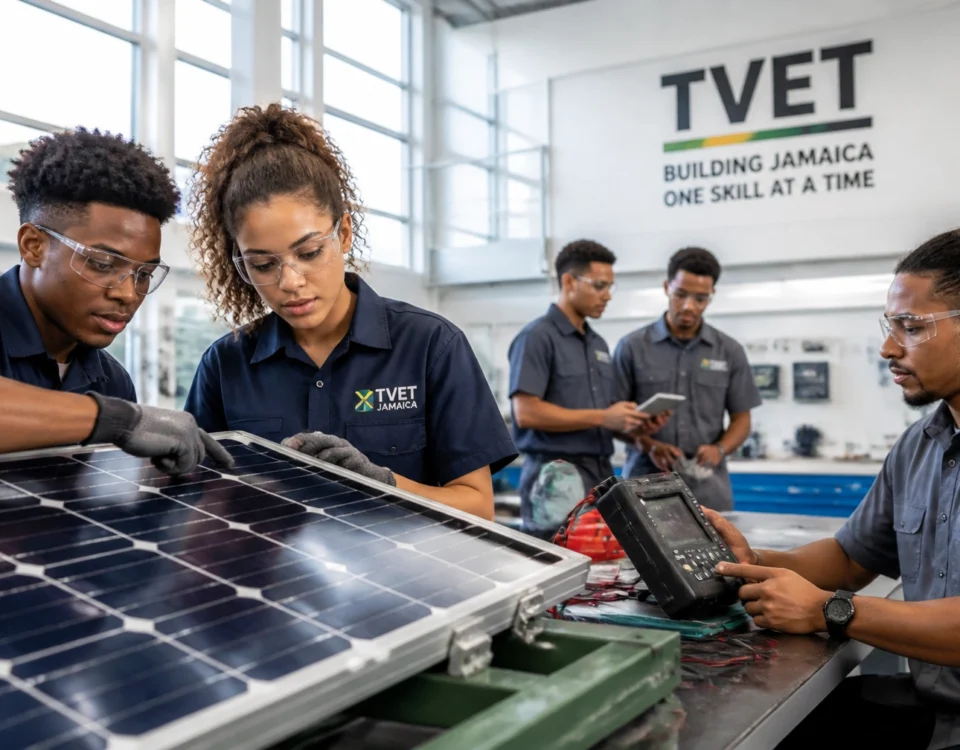

“The Struggle for Competency” — 5 Ways to Modernize Your TVET Programs Now
June 29, 2026
What Is a Workforce Development Consultant? Defining the Profession That Creates Jobs, Not Just Reports
July 21, 2026
7 Mistakes You’re Making with Your Skills Gap Analysis (and How to Fix Them Fast)
Governments and major corporations are currently flying blind. Across the Global South and North America, billions of dollars are being poured into training programs that fail to move the needle on productivity. Why? Because the foundation: the Skills Gap Analysis: is fundamentally broken.
In my capacity as a Labour Market and Political Statistician at Dunn Pierre Barnett and Company Canada Ltd (DPB Global), I have witnessed the same catastrophic errors repeated from the Caribbean to Canada. When a national skills audit is mishandled, it isn’t just a statistical error; it is a direct threat to economic stability and workforce development. Organizations are “gambling with human capital” because they lack the rigorous, AI-driven data necessary to compete in a 2026 economy.
If you are responsible for workforce planning or Technical and Vocational Education and Training (TVET) policy, you are likely making at least one of these seven fatal mistakes. Here is how to fix them before your strategy collapses.
1. The Scope Mistake: Flying Without a Radar
The most common failure in any labour market assessment is a lack of clear objectives. Organizations often launch a skills gap analysis without deciding if they are looking for immediate operational fixes or long-term strategic transformation. Without a defined scope, you end up with a mountain of data that means nothing.
The Fix: Before you collect a single data point, you must define the “Why.” Are you preparing for a digital transformation? Are you addressing youth unemployment? At DPB Global, we implement structured Labour Market Information Systems (LMIS) that align the scope of the analysis with the specific national development goals of the region. Define your target: whether it’s a specific sector like tourism or a demographic like the BIPOC community: before you begin.
2. The Data Mistake: Relying on “Guesstimate” Analytics
Subjective surveys are the “silent killer” of accuracy. If your primary source of data is asking managers how they feel about their team’s skills, your results are already compromised. Anecdotal evidence is not a substitute for statistical science.
The Fix: You must transition to evidence-based research. Use a mixed-method approach that combines quantitative performance data with qualitative insights. DPB Global specializes in high-level statistical analysis and National Skills Audits that utilize real-time data. We move beyond “opinions” to identify the hard competencies that exist: and those that are missing.

3. The Equity Mistake: Ignoring the “Black Data” and BIPOC Reality
Standard skills gap analyses often ignore the structural disparities facing Black, Indigenous, and People of Color (BIPOC). When you use a “one-size-fits-all” model, you overlook the unique barriers and untapped potential within racialized populations. This isn’t just a social failure; it’s an economic one.
The Fix: Integrate specialized research on diverse populations. DPB Global maintains one of the world’s largest databases on Black Data in the Global South. We recently launched the first-ever labour market needs assessment for Black businesses in Canada, uncovering disparities that traditional audits missed. Your analysis must account for the diaspora to be truly comprehensive.
4. The Technical Trap: Overlooking Behavioral Competencies
Many TVET programs fall into the “Technical Trap”: focusing exclusively on hard skills like welding or coding while ignoring the “power skills” like critical thinking, leadership, and adaptability. In the era of AI, a worker with technical skills but no analytical capacity is a worker who will soon be obsolete.
The Fix: Adopt a Competency-Based Education and Training (CBET) framework. This ensures that your skills gap analysis measures both technical proficiency and behavioral competencies. Our instructional design team at DPB Global builds frameworks that ensure workers are not just “trained” but “competent” in the holistic sense required by modern industry.

5. The Root Cause Error: Mistaking Policy Failures for Skill Gaps
Sometimes, a “skills gap” isn’t a skills gap at all: it’s a management failure. If you identify a performance lag and immediately prescribe training, you might be treating the symptom instead of the disease. Outdated equipment, poor management consulting, or rigid hiring policies are often the real culprits.
The Fix: Use Root Cause Analysis (RCA). Before assuming your workforce needs more training, evaluate your organizational structure and capacity building strategies. Our management consulting division helps governments and institutions determine if they need a new curriculum or a complete overhaul of their workforce development policy.
6. The Static Analysis: Ignoring the “Future of Work”
A skills gap analysis that only looks at today is already obsolete. With the rapid advancement of AI and automation, basing your TVET consulting on current job descriptions is a recipe for disaster. You aren’t training for the jobs of 2024; you should be training for the jobs of 2030.
The Fix: Incorporate AI-driven analytics and trend forecasting into your assessment. We use predictive modeling to identify emerging occupational demands. This “Future-Proofing” approach allows regional bodies to pivot their workforce development strategies before the crisis hits, rather than reacting to it after the fact.

7. The Shelf-Life Mistake: Treating the Report as the End Goal
The most tragic mistake is the “Dusty Report” syndrome. A government commissions an expensive labour market assessment, receives a 300-page document, and then does nothing with it. A skills gap analysis is not a static document; it is a living roadmap for investment.
The Fix: Ensure your analysis includes an actionable implementation plan. This is where Business Development and Capacity Building come into play. DPB Global doesn’t just deliver data; we provide the instructional design and strategic planning necessary to execute the findings. We stay with our clients: whether they are the UN, WHO, or national governments: to ensure the gaps are actually closed.
The Solution: A Data-Driven Revolution
The global labour market is in a state of flux. To survive, governments and institutions must move away from archaic, “gut-feeling” planning. The solution is a rigorous, AI-powered National Skills Audit that addresses the specific needs of your population, including the often-ignored BIPOC communities.
At DPB Global, we provide the precision and the platform to turn these 7 mistakes into 7 strategic advantages. We don’t just find the gaps; we bridge them.
Is your workforce ready for what’s coming? If you haven’t conducted a rigorous, data-driven audit in the last 12 months, the answer is likely no.
About the Author:
Dr. C. Justine Pierre, Dunn Pierre Barnett and Company Canada Ltd (DPB Global), specializing in labour market trends, data-driven policy, and economic justice for BIPOC communities globally.
About DPB Global:
Dunn Pierre Barnett and Company Canada Ltd (DPB Global) is a premier full-service consulting firm specializing in Technical Vocational Education and Training (TVET), Competency-Based Education and Training (CBET), Labour Market Research and Social Surveys, and Workforce Development. With global expertise in Instructional Design, Management Consulting, Capacity Building, and Business Development, we maintain one of the world’s largest databases on Black Data and populations in the Global South, providing expert insights and AI-driven analytics to support diverse communities, governments, and organizations across Canada, Africa, and the Americas. Visit us at dpbglobal1.com.