

Grenada’s Political Crossroads:
October 9, 2025
Youth Unemployment: Why the Caribbean’s Data is Decades Out of Date
March 31, 2026By, Dr. Justine C. Pierre: Labour Market Consultant

March 2026
The Caribbean is currently witnessing an economic phenomenon that occurs once in a generation. According to recent data from the Caribbean Development Bank (CDB), the region is projected to see economic growth of approximately 6.2% in 2026. On the surface, that looks like a victory lap for the entire archipelago. But if you peel back the curtain, the reality is far more concentrated.
That 6.2% is almost entirely driven by one country: Guyana.
Without Guyana’s booming oil industry, the expected growth across the rest of the Caribbean drops to a staggering 1.1%. In every sense of the word, Guyana is doing the “heavy lifting” for the regional economy. With an individual growth rate expected to exceed 20% this year, Guyana is the clear outlier in a region where service-based economies, like Jamaica, Barbados, and the Bahamas, are still grappling with the moderate recovery paces of the post-pandemic era and the volatility of global tourism.
However, growth on paper does not always translate to prosperity in the pocket. For Guyana to transform this temporary “oil luck” into a permanent “economic legacy,” it requires more than just offshore rigs; it requires a workforce that is scientifically mapped to the needs of a trillion-dollar future.
This is where the foundation of growth begins: The National Skills Audit.

1. The Foundation of Growth: The 2024-2025 National Skills Audit
In 2024 and 2025, guided by recommendations from the World Bank, the Government of Guyana took a decisive and forward-looking step to secure its economic future. Rather than relying on assumptions about workforce needs, the Government commissioned the Canadian consultancy firm Dunn Pierre Barnett and Company Canada Ltd. (DPB Global) to undertake the country’s first-ever comprehensive National Skills Audit.
This was not a superficial review of labour market trends. DPB Global conducted a rigorous, data-driven diagnostic across eight priority sectors and all ten administrative regions of Guyana. From the coastal economic hubs to the remote hinterland communities, the study systematically assessed the existing capabilities of over 450,000 Guyanese nationals, benchmarking them against the projected demands of one of the fastest-growing economies in the world.
As Dr. Justine Pierre, Co-Founder and Director of Research and Business Development at DPB Global, famously stated: “A national skills audit is the foundation of growth. Unless a country has a national skills audit or enough data on its human capital, it lacks the ability to grow sustainably. It is the bedrock upon which every successful state is built.”

2. Why Data is the “New Oil” for Small Developing States
For decades, many Small Island Developing States (SIDS) and developing nations across the Caribbean have relied heavily on anecdotal evidence and fragmented insights to guide national planning. Decisions on education, training systems, and workforce development were often based on assumptions, political cycles, or short-term pressures—rather than robust, real-time labour market intelligence.
Governments built schools, expanded training centres, and introduced programmes based on what they believed the market needed, rather than what data-driven evidence confirmed was required.
The consequences have been profound and persistent:
- High unemployment and underemployment in certain sectors, particularly among youth
- Severe skills mismatches, where graduates are not aligned with industry needs
- Chronic dependence on foreign labour, often at significantly higher cost
- Inefficient public spending, with investments yielding limited economic returns
In effect, many economies have been caught in a paradox—simultaneously experiencing labour surpluses and labour shortages.
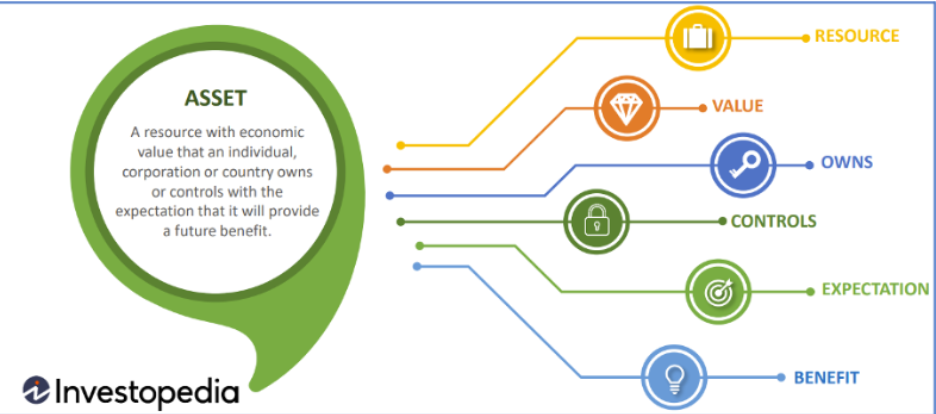
Photo credits: https://www.linkedin.com/pulse/treating-your-data-strategic-asset-maritza-curry-howard-diesel/
Data as a Strategic Asset
In the modern global economy, data has become the most valuable resource—not just for large economies, but especially for small and vulnerable states.
For SIDS, data is not simply an administrative tool—it is a strategic asset equivalent to natural resources.
Just as oil must be explored, extracted, refined, and strategically deployed, so too must data be:
- Collected systematically (through surveys, censuses, and administrative systems)
- Analyzed rigorously (using statistical and econometric methods)
- Translated into policy (through evidence-based decision-making frameworks)
Without this process, countries risk possessing resources without direction—growth without structure, and opportunity without inclusion.

Photo credits: https://op.gov.gy/address-of-his-excellency-dr-mohamed-irfaan-ali-president-of-the-co-operative-republic-of-guyana-2020-08-19/
3. The Vision: President Irfan Ali’s Ambitious Ecosystem
The current trajectory of Guyana is not just about extracting crude oil. President Irfan Ali has laid out a vision that positions Guyana as a regional transport and logistics hub. This “imagination aspect,” as the President calls it, involves:
- Infrastructure Expansion: A deep-water port, road links to Brazil, and expanded airports.
- Energy Exports: Transitioning from an oil producer to a regional energy exporter via the Amidus Falls Hydro Project and gas-to-energy plants.
- Manufacturing: Developing gas bottling and fertilizer plants to drive down the cost of production for local farmers and businesses.
These projects are massive. They are transformative. But they are also labor-intensive. The National Skills Audit conducted by DPB Global provides the statistical backbone to ensure that when these projects launch, the “Help Wanted” signs are met by qualified Guyanese citizens rather than an endless stream of imported contractors.

Photo Credits: Moving Beyond the Oil Rig: Putting Wealth in Pockets – Search Images
4. Moving Beyond the Oil Rig: Putting Wealth in Pockets
One of the most critical takeaways from the 2024-2025 audit, and the recently completed Energy conference in Guyana is the focus on Local Empowerment. President Ali has made it clear: oil wealth only matters if it reaches the citizens’ pockets.
To facilitate this, the government is utilizing the data from the skills audit to structure ownership opportunities for locals and the diaspora. By identifying the gaps in the energy value chain, the government can now target specific training programs that allow Guyanese entrepreneurs to own parts of the gas bottling and fertilizer facilities.
Furthermore, the launch of a Junior Stock Exchange and the provision of interest-free, collateral-free loans through the Guyana Development Bank are all predicated on having “bankable” businesses. You can’t have a bankable business without a skilled workforce. The ensures that these financial investments are backed by human competence.
Link – https://thecaribbeancamera.com/canadian-firm-labour-market-project-guyana/
5. The Role of DPB Global: Turning Data into Destiny
At Dunn Pierre Barnett and Company Canada Ltd. (DPB Global), we operate at the critical intersection of public intelligence, labour market analytics, and workforce development. Our work goes beyond traditional research—we transform raw data into actionable strategies that shape national development trajectories.
Our engagement in Guyana represents more than a single consultancy assignment; it serves as a replicable blueprint for Small Island Developing States (SIDS), the Caribbean, and emerging economies across Africa seeking to align economic growth with human capital development.
From Data Collection to Strategic Intelligence
At DPB Global, we do not simply collect data, we generate labour market intelligence. This means moving beyond basic headcounts to address deeper, policy-relevant questions, such as where critical skills shortages are emerging, which populations are being left behind, and how workforce development can be effectively aligned with national growth sectors. Our approach is grounded in rigorous analysis of skills gaps, structural inequalities, and long-term economic demand, ensuring that data translates into actionable strategy. Leveraging one of the largest proprietary databases on Black, Indigenous, and People of Colour (BIPOC) populations globally, DPB Global tracks over 50 core indicators, including key metrics aligned with the United Nations Sustainable Development Goals (SDGs), spanning education, employment, income, gender equity, migration, and social inclusion, to support inclusive, evidence-based development planning.
Ensuring Inclusive and Spatially Balanced Development
A defining feature of our methodology is its commitment to equity and geographic inclusivity. In Guyana, our National Skills Audit covered all ten administrative regions, ensuring that labour market insights were not concentrated solely in urban centers such as Georgetown, but extended to hinterland and underserved communities.
This approach ensures that:
- A resident in region 9 (Upper Takutu–Upper Essequibo) has equal visibility in national workforce planning as someone in the capital
- Regional disparities are identified and addressed early
- Development strategies reflect the realities of the entire population—not just economic hubs
Our Core Analytical Framework
DPB Global employs a rigorous, multi-layered analytical framework that integrates supply, demand, and forward-looking planning:
1. Supply-Side Analysis
We assess the existing skills base of the population, including:
- Educational attainment
- Technical competencies
- Workforce participation
- Informal vs. formal employment
This provides a clear picture of what human capital currently exists within the economy.
2. Demand-Side Forecasting
We analyze current and projected labour demand across key growth sectors, including:
- Oil and Gas
- Agriculture
- Construction and Infrastructure
- Services and emerging industries
Using econometric modeling and sectoral projections, we identify:
- Future occupational needs
- Skills required over a 5–10-year horizon
- Potential labour shortages and surpluses
3. Skills Gap Identification and Mitigation
By systematically comparing labour supply with current and projected demand, we identify critical skills gaps and translate these insights into actionable policy recommendations. This process includes the design of targeted Technical and Vocational Education and Training (TVET) programmes, the recommendation of curriculum reforms aligned with evolving industry needs, and the identification of priority areas for upskilling and reskilling. In addition, we develop forward-looking implementation timelines to prevent future labour shortages, ensuring that workforce development efforts are aligned with anticipated economic demands through 2027 and beyond.
6. From Insight to Implementation
What distinguishes DPB Global is our ability to move seamlessly from analysis to execution. Our outputs are not static reports, but dynamic, results-oriented tools designed to drive real-world impact. They serve as policy instruments for governments, enabling evidence-based decision-making; investment guides for development partners, aligning funding with strategic priorities; and operational frameworks for training institutions, ensuring that education and workforce systems are responsive to market demands.
In the context of Guyana, this approach ensures that the country’s unprecedented economic growth is matched by a prepared, capable, and inclusive workforce, capable of sustaining and maximizing the benefits of its rapid transformation.
7. A Model for the Future
The work undertaken in Guyana demonstrates a critical principle: data, when properly harnessed, is not merely descriptive, it is transformative. In an era where economies are evolving rapidly and decisions must be both timely and precise, data provides the foundation for clarity, direction, and accountability. Rather than relying on assumptions or fragmented insights, Guyana’s approach shows how robust, evidence-based analysis can guide national planning, align workforce development with economic priorities, and ensure that growth is both strategic and inclusive.
By converting data into strategy, and strategy into action, DPB Global is enabling countries to move from uncertainty to informed decision-making, and from short-term growth to long-term, sustainable development. This model demonstrates how nations, particularly Small Island Developing States and emerging economies, can leverage labour market intelligence to maximize the impact of their resources, strengthen institutions, and build resilient, future-ready economies that leave no segment of the population behind.

8. The Caribbean Outlook: A Warning and an Opportunity
As we look toward the remainder of 2026, the Caribbean Development Bank’s warning remains relevant: the region’s growth is lopsided. While Guyana continues its streak of double-digit expansion, other nations are vulnerable to global inflation, shifting commodity prices, and geopolitical tensions in the Middle East that could slow tourism.

The lesson from Guyana is clear: Data creates resilience.
Countries like Suriname, Trinidad and Tobago, Jamaica, Barbados and countries of the OECS must follow the “Guyanese Model” of conducting a National Skills Audit. If the rest of the Caribbean wants to stop being “passengers” on Guyana’s growth engine and start doing some of the heavy lifting themselves, they must invest in s Labour Market Information System: https://www.dpbglobal2.com/labor-market-information-system/
7. Conclusion: The Bottom Line is the Pocket
Guyana is at a turning point. It is no longer a “potential” success story; it is a global powerhouse in the making. But as Dr. Pierre points out, that power is only as strong as the data behind it.
The 2024-2025 National Skills Audit conducted by DPB Global has provided the roadmap. It has identified the engineers, the welders, the project managers, and the entrepreneurs of tomorrow. It has ensured that the “heavy lifting” Guyana is doing for the Caribbean is supported by a foundation of local talent and strategic planning.
Is Guyana creating real investment access for its people? The data says yes. But the work doesn’t stop here. Continuous workforce development and real-time labour market monitoring are the only ways to ensure that this boom doesn’t become a bust.
At DPB Global, we are proud to be the architects of this data-driven revolution. Because at the end of the day, the bottom line isn’t just about GDP: it’s about the pocket of every citizen.

Are you a government official or a private sector leader looking to future-proof your workforce? Contact Dunn Pierre Barnett and Company Canada Ltd (DPB Global) today to learn how our National Skills Audits and Labour Market Assessments can provide the foundation for your country’s growth. Contact us at: admin@dpbglobal1.com
Keywords: national skills audit, labour market assessment, workforce development consulting, Guyana development, skills gap analysis, DPB Global, Dr. Justine Cleophas Pierre, Caribbean economic growth.
Appendix:
What is a National Skills Audit?
A National Skills Audit (NSA) is a comprehensive, data-driven assessment of a country’s workforce capabilities. It evaluates how well skills supply, education and labour force competencies, aligns with skills demand, including current and emerging industry needs. It is the foundation for building a workforce that matches the direction of the economy.
Why It Matters Now
In a rapidly transforming global economy shaped by digitalization, globalization, and sectoral shifts, countries must ensure their human capital systems are adaptive and future ready. The NSA provides the critical evidence needed to align education, training, and employment systems with national development priorities.
The Strategic Problem
Many countries, especially across the Caribbean and Global South—face a persistent paradox: high levels of educational attainment alongside high unemployment and underemployment. This disconnect reflects deep structural inefficiencies in how skills are developed and utilized.
What’s Driving the Skills Mismatch?
The mismatch between education and employment is driven by weak alignment between training systems and labour market needs, limited real-time labour market data, fragmented workforce planning, and inadequate forecasting of future skills demand.
The Consequences of Inaction
Without intervention, countries face critical challenges: skills shortages in high-growth sectors, rising youth unemployment, brain drain, increased reliance on foreign labour, and inefficient public investment in education and training systems.
What a National Skills Audit Delivers
A well-executed NSA produces a complete picture of the labour market. It maps workforce skills, identifies industry needs, highlights gaps and mismatches, evaluates the relevance of education systems, and forecasts future skills requirements over the medium to long term.
A Tool for Policy and Investment
A National Skills Audit is not just diagnostic—it is strategic. It enables governments to align education with economic priorities, design evidence-based labour market policies, reduce unemployment, and strengthen productivity and competitiveness.
Value for Development Partners
For investors and development partners, the NSA provides a clear human capital roadmap. It offers sector-specific insights for targeted interventions while reducing risks associated with workforce constraints.
Application in High-Growth Economies
In fast-growing economies like Guyana, where sectors such as oil and gas, construction, and ICT are expanding rapidly, a National Skills Audit is essential. It ensures that economic growth is supported by a skilled, locally available workforce.
The Risk of Getting It Wrong
Failure to align skills with growth leads to economic leakage through imported labour, widening social inequality, and missed opportunities for national workforce development.
From Data to Transformation
At DPB Global, the National Skills Audit is part of a broader transformation framework:
Data → Analysis → Policy → Implementation → Impact.
Our approach ensures that insights are translated into action—delivering policy tools, operational frameworks, and investment strategies that drive inclusive and sustainable economic growth.
References
- Caribbean Development Bank. (2026, March 3). Caribbean Economies Face Modest Growth in 2026 Amid Global Uncertainty. https://www.caribank.org/newsroom/news-and-events/caribbean-economies-face-modest-growth-2026-amid-global-uncertainty-cdb (Supports the 6.2% regional growth projection for 2026, with Guyana driving it to exceed 20% while excluding Guyana drops to 1.1%.)
- Stabroek News. (2026, March 4). Caribbean economies face modest growth in 2026 – CDB. https://www.stabroeknews.com/2026/03/04/news/guyana/caribbean-economies-face-modest-growth-in-2026-cdb (Confirms regional growth of 6.2% including Guyana’s >20% projection; 1.1% excluding Guyana.)
- Guyana Chronicle. (2026, March 5). Guyana remains key engine of Caribbean economic growth. https://guyanachronicle.com/2026/03/05/guyana-remains-key-engine-of-caribbean-economic-growth-cdb (Highlights Guyana’s role in lifting regional growth to 6.2% via double-digit expansion.)
- Department of Public Information, Guyana. (2026, February 25). Guyana to drive majority of Caribbean growth in 2026–2027. https://dpi.gov.gy/world-bank-guyana-to-drive-majority-of-caribbean-growth-in-2026-2027 (World Bank projections: Guyana 19.6% growth in 2026, regional averages driven by Guyana’s oil sector.)
- The New Today Grenada. (2023, December 22). Grenadian leads firm about to conduct “national skills audit” in Guyana. https://www.thenewtodaygrenada.com/local-news/grenadian-leads-firm-about-to-conduct-national-skills-audit-in-guyana (Announces DPB Global’s contract for Guyana’s National Skills Audit to analyze workforce and identify gaps in oil/gas and other sectors.)
- The Caribbean Camera. (2023, December 27). Canadian firm to begin major labour market project in Guyana. https://thecaribbeancamera.com/canadian-firm-labour-market-project-guyana/ (Details DPB Global’s “National Skills Audit Consultancy” for the Ministry of Education, covering national workforce analysis.)
- Georgetown Chamber of Commerce and Industry (GCCI). (2024, February 8). GCCI meets with company conducting National Skills Audit. https://gcci.gy/gcci-meets-with-company-conducting-national-skills-audit (Meeting with Dr. Justine Pierre of DPB Global on the ongoing National Skills Audit.)
- Bureau of Statistics, Guyana. (2024). Guyana Labour Force Survey (GLFS) 2024 Bulletin. https://statisticsguyana.gov.gy/wp-content/uploads/2019/10/GLFS-2024-Bulletin.pdf (Provides labour force data: ~396,000 in labour force Q4 2024; working-age population ~701,000; supports scale of workforce assessment.)
- Trading Economics. (2026). Guyana – Labor Force, Total. https://tradingeconomics.com/guyana/labor-force-total-wb-data.html (World Bank data: Labour force ~292,190 in 2024; contextual for audit coverage of ~450,000 nationals/workforce elements.)
- Medium (Dr. Justine C. Pierre). (2026). Bridging the Gap: The Reality of Skills Mismatch and Youth Unemployment in the Caribbean. https://medium.com/@cjustinepierre/bridging-the-gap-the-reality-of-skills-mismatch-and-youth-unemployment-in-the-caribbean-27f05e74d6a2 (Author’s expertise and DPB Global’s role in skills audits.)
- LinkedIn (Dr. Justine Cleophas Pierre). (n.d.). Profile and projects. https://ca.linkedin.com/in/justine-cleophas-pierre-ph-d-0a207214 (Confirms role as Lead Consultant for Guyana National Skills Audit.)
- News Room Guyana. (2025, January 26). Second gas project, deepwater port ‘must happen’ in next term – President. https://newsroom.gy/2025/01/26/second-gas-project-deepwater-port-must-happen-in-next-term-president (President Ali’s vision for second gas-to-energy project and deepwater port.)
- Reuters. (2026, February 17). Guyana launches competitive process for hydroelectric project. https://www.reuters.com/business/energy/guyana-launches-competitive-process-hydroelectric-project-president-says-2026-02-17 (Amalia Falls Hydro Project [noted as Amidus/Amalia]; energy transition and regional exports.)
- Caribbean National Weekly. (2026, February 17). President Ali unveils ambitious plan to transform Guyana into energy and trade hub. https://www.caribbeannationalweekly.com/news/president-ali-unveils-ambitious-plan-to-transform-guyana-into-energy-and-trade-hub (Deep-water port linking Brazil/CARICOM; energy security via hydro and gas projects.)
- DPB Global. (n.d.). Labor Market Information System. https://www.dpbglobal2.com/labor-market-information-system/ (Promotes LMIS as key for Caribbean nations following Guyana model.)
- Americas Quarterly. (2026, January 20). Guyana: A 2026 Snapshot. https://www.americasquarterly.org/article/guyana-a-2026-snapshot (Population ~0.8 million in 2026; unemployment/informal employment data.)
- Global Financial Integrity. (n.d.). Trade-Related Illicit Financial Flows: Data by Country. https://gfintegrity.org/iif-data-by-country (Contextual for illicit flows in developing states, though not Guyana-specific in article.)
- LinkedIn (Maritza Curry Howard). (n.d.). Treating your data as a strategic asset. https://www.linkedin.com/pulse/treating-your-data-strategic-asset-maritza-curry-howard-diesel/ (Photo credit/source for data as strategic asset.)
- Office of the President, Guyana. (2020, August 19). Address of His Excellency Dr. Mohamed Irfaan Ali. https://op.gov.gy/address-of-his-excellency-dr-mohamed-irfaan-ali-president-of-the-co-operative-republic-of-guyana-2020-08-19/ (Photo credit for President Ali’s vision.)
- Medium (Dr. Justine C. Pierre). (2026). Dunn Pierre Barnett and Company Canada Ltd: A Global Black-Owned Powerhouse. https://medium.com/@cjustinepierre/dunn-pierre-barnett-and-company-canada-ltd-a-global-black-owned-powerhouse-in-research-labour-8082c86451ef (DPB Global’s Guyana skills audit as major project.)
- Guyana Tourism Authority (Facebook). (n.d.). National Skills Audit Survey Review Meeting. https://www.facebook.com/GuyanaTourismAuthority/posts/happening-now-national-skills-audit-survey-review-meeting-with-key-government-an/901976201970647 (Review meeting with Dr. Justine Pierre on skills audit.)
- Board of Industrial Training Guyana (Facebook). (n.d.). National Skills Audit Consultancy. https://www.facebook.com/100064261016522/posts/786660453485981 (Rapid assessment of Guyana’s workforce via DPB Global.)
- Jamaica Observer. (2023, December 27). Canadian firm to conduct major labour market survey in Guyana. https://www.jamaicaobserver.com/2023/12/27/canadian-firm-to-conduct-major-labour-market-survey-in-guyana (Contract signing for national skills audit.)
- DPB Global. (n.d.). Website and services. https://www.dpbglobal1.com (inferred from article links) (General reference for DPB Global’s work in skills audits and LMIS.)
- World Bank. (2026). Global Economic Prospects Report (January 2026). (Referenced in multiple sources above, e.g., DPI Guyana.)
- Guyana Energy Conference (2026). (Referenced in article context for energy discussions and local empowerment.)
- Dr. Justine C. Pierre (personal/professional statements). (2026). Various Medium/LinkedIn publications. (For quotes on skills audit as “foundation of growth” and data as “new oil.”)