
Advancing a Digital Economy: Prime Minister Dickon Mitchell’s Policy Framework for Grenada
March 31, 2026
Setting the Record Straight: DPB Global’s Position on Citizenship by Investment (CBI) Schemes
June 22, 2026
1. Introduction: The High Cost of "Guesswork" in Governance
June 2026
For decades, governments and large-scale organizations across the Global South have been flying blind. They make massive investments in education and vocational training based on anecdotal evidence or outdated census data. The result? A catastrophic mismatch between what the education system produces and what the economy actually needs.
In the Caribbean and Africa, this "data chaos" isn't just an administrative headache: it is a barrier to economic sovereignty. When you don't own your labour market intelligence, you don't own your future. At Dunn Pierre Barnett and Company Canada Ltd (DPB Global), we have seen how "data for sale" from generic international providers fails to capture the nuance of BIPOC (Black, Indigenous, and People of Color) communities.
A modern Labour Market Information System (LMIS) is the only way to tighten your grip on economic reality. It is the transition from "we think" to "we know." This deep dive explores the technical mechanics of how a high-functioning LMIS, powered by AI-driven analytics, transforms raw chaos into strategic intelligence.
2. The Anatomy of an LMIS: More Than Just a Database

At its core, an LMIS is a sophisticated data pipeline. It isn't a static website; it is a living ecosystem that balances three critical pillars: Supply, Demand, and Matching.
The Demand Side: Real-Time Labour Market Analysis
Traditional surveys are too slow. By the time a paper-based Labour Force Survey is published, the market has already moved. A technical LMIS utilizes automated "scraping" of job postings, employer HR feeds, and occupational taxonomies. We look at what businesses are actually hiring for today, not what they said they needed last year.
The Supply Side: Mapping the Human Capital
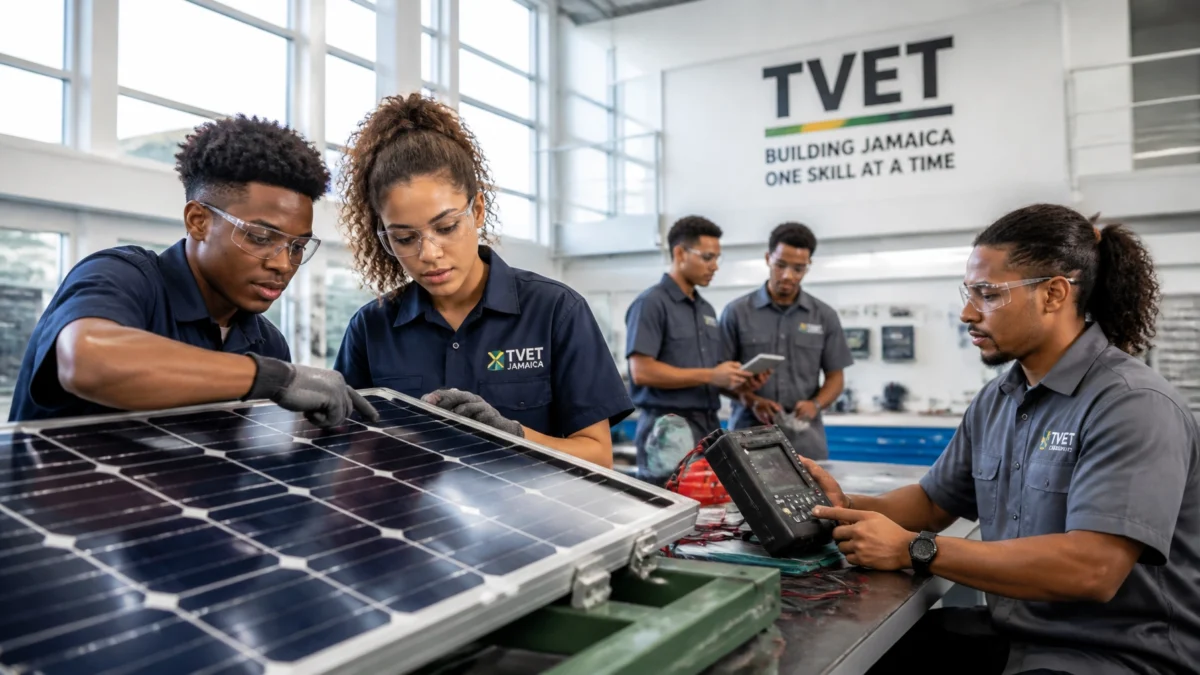
This involves ingesting data from TVET (Technical and Vocational Education and Training) centers, universities, and professional licensing bodies. We track the flow of graduates and their specific skill sets. Without this, you risk over-saturating the market with degrees that have no corresponding vacancies.
The Matching Engine: Where the Magic Happens
The "Matching" component is the technical heart of the system. It identifies where the Supply meets the Demand. If a country is investing in a new green energy sector, the LMIS should immediately flag if the current vocational pipeline is producing enough solar technicians. If not, the system triggers a "Skills Gap" alert.
3. The Technical Engine: How DPB Global Deploys AI-Driven Analytics
We don't just collect data; we interrogate it. Our systems use advanced Natural Language Processing (NLP) to go beyond simple job titles.
NLP for Skills Extraction
A job title like "Project Manager" means different things in different industries. Our AI parsers scan thousands of resumes and job descriptions to extract the underlying skills. By mapping these to a global skills ontology, we can see that a worker in Lagos has 90% of the skills needed for a high-demand tech role in Toronto, identifying exactly which "micro-credential" is needed to bridge that last 10%.
Predictive Forecasting
Using machine learning models, we can simulate future scenarios. What happens to the Jamaican tourism sector if AI adoption increases by 20% in the next three years? Our models provide labour market forecasting that helps policy-makers prepare for disruption before it arrives, rather than reacting to it after the layoffs begin.
Semantic Embeddings
We represent jobs and people as vectors in a shared digital space. This allows for high-precision recommendations. Instead of matching a "Plumber" to a "Plumbing Job," our engine can identify that a specialized welder has the semantic "skill proximity" to transition into underwater infrastructure repair: a much higher-paying and higher-demand field.
4. The BIPOC Imperative: Why Aggregate Data is Dangerous

General labour market data often hides the very disparities it should be solving. When you look at "National Unemployment," you miss the story of how specific groups are being left behind.
At DPB Global, we specialize in disaggregated data modeling. Our work, such as Canada’s first-ever Black Labour Market Needs Assessment, proves that when you separate data by race, gender, and geography, the insights change completely.
Equity-Aware Analytics
Our LMIS architecture includes "Equity Dashboards." We don't just track who is getting hired; we track the "Wage Gap" and the "Promotion Gap" for BIPOC communities. We use bias-diagnostics in our AI models to ensure that our recommendation engines don't accidentally replicate historical hiring prejudices.
By maintaining one of the largest databases on Black populations in the Global South, we provide a level of statistical rigor that generic firms simply cannot match. We understand the migration trends of health workers (as seen in our work with PAHO/WHO) and use that data to prevent "brain drain" in developing nations.
5. Skills Gap Analysis: Precision over Guesswork

A skills gap analysis is the most powerful tool in the LMIS arsenal. Most organizations try to solve skills gaps by throwing money at "general training." This is a waste of capital.
A technical LMIS identifies the Specific Missing Node.
- Identify Required Skills: The system aggregates skills from current high-growth job postings.
- Measure Current Skills: We ingest data from our National Skills Audits to see what the workforce actually knows.
- Compute the Gap: The AI calculates the distance between the two.
- Targeted Intervention: The system recommends specific curriculum changes to TVET providers.
This isn't a suggestion; it's a blueprint for workforce development consulting that actually works.
6. Conclusion: The Digital Backbone of Governance
The transition from a "traditional" labour department to an AI-driven, data-centric authority is the most significant step a nation can take toward economic resilience. An LMIS is not a luxury; it is the Digital Backbone of modern governance.
At DPB Global, we don't just sell software. We provide the expertise of Dr. C. Justine Pierre and our team of global statisticians to ensure that your data leads to policy, and your policy leads to prosperity. If you are still relying on "gut feeling" to manage your human resources, you are leaving your economy's future to chance.
The data is there. The tools are ready. The only question is: do you have the courage to look at what the numbers are telling you?
About the Author: Dr. C. Justine Pierre, Dunn Pierre Barnett and Company Canada Ltd (DPB Global), specializing in labour market trends, data-driven policy, and economic justice for BIPOC communities globally.
About DPB Global: Dunn Pierre Barnett and Company Canada Ltd (DPB Global) is a premier full-service consulting firm specializing in labour market information systems (LMIS), workforce development, and statistical analysis. We maintain one of the world's largest databases on Black populations in the Global South, providing expert insights and AI-driven analytics to support diverse communities, governments, and organizations across Canada, Africa, and the Americas. Visit us at dpbglobal1.com.